All Saints Boys Home
Lessons in ChemistryAll Saints Boys Home is the institution in Iowa where Calvin Evans grew up after losing his family. The novel reveals it first through a discarded appeal for money and then through the memories of its bishop: a place with more than a hundred boys, a history of harsh discipline, and a young Calvin whom no adopting couple chose. Its significance turns on the collision between the home’s public need for support and the damage its residents endured there.
Setting and First Appearance
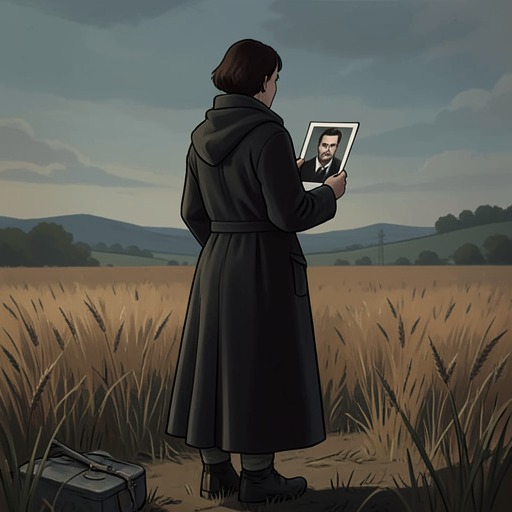
Madeline Zott’s search begins with little to go on: she is looking in Iowa for a boys’ home whose name sounds like a girl’s. At the library, she scans the B listings and finds no Boys Home. Reverend Wakely points out that such institutions are sometimes named for saints, directing the search toward the clue that makes All Saints identifiable. The small correction changes the problem from finding a generic institution to recognizing the religious name under which Calvin’s childhood home was listed.
Madeline explains that she is looking because the home is where her father grew up, and that she is making a family tree. Her investigation connects a place she has never visited to a family history she is trying to recover. All Saints is not simply an entry in a directory: it is the missing setting behind her father’s early life.
Calvin’s Childhood There
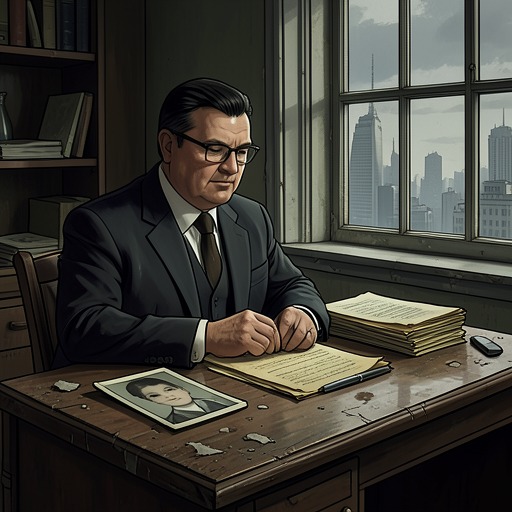
Calvin’s connection to the home first reaches Madeline through a paper she finds wadded in his trash. The letter says that All Saints has lost its main donor and is appealing to former residents for help. That donor had once ensured that the boys received scientific educational opportunities and healthy outdoor activities. The appeal therefore describes not only financial need but also the particular opportunities the institution could no longer promise after its benefactor was gone.
Calvin’s response, also in the trash, is an angry rejection. He tells the institution, in substance, that its leaders deserve condemnation and jail rather than a donation. The discarded appeal and reply leave the reasons for his hostility to be explained later, but they establish that he did not regard his childhood home with gratitude or loyalty. The distance between the home’s request for help and Calvin’s refusal becomes an early sign of a painful history.
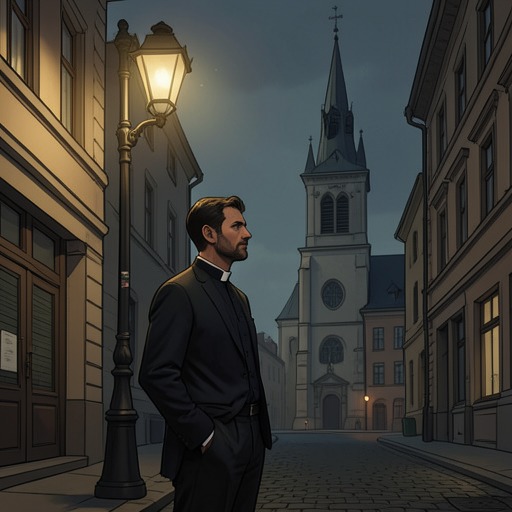
The bishop’s memories supply that history in a scene set in 1933, when he was assigned to the shabby Iowa boys’ home instead of the wealthy parish he had hoped for. More than a hundred boys of varying ages lived there. The bishop regarded them with contempt, imagining them as future criminals, while the archbishop presented the institution as a place in need of discipline. The home’s religious identity thus sits beside an account of an authority structure that views its boys as problems to be controlled.
Calvin and the Institution
The bishop remembers Calvin repeatedly appearing in his office after breaking a window, stealing a book, or giving a priest a black eye. The priest, the bishop recalls, had only been trying to make Calvin feel loved. The list captures both Calvin’s defiance and the failure of affection to reach him in a form he could accept; the bishop himself labels Calvin a curse. The narration does not turn the home into a neutral refuge: its adult authority figures remember the boy chiefly through infractions, while Calvin’s later response to the institution makes clear that his own judgment of it was harsher still.
Couples sometimes came to All Saints hoping to adopt one of the boys, but none showed interest in Calvin. The bishop’s recollection makes that repeated exclusion part of the place’s history: adoption offered some residents a possible departure, but Calvin remained behind. His orphaned childhood at All Saints was therefore marked not only by the loss of his family but also by the absence of a new family willing to choose him.
The Search for Calvin
The pattern changes when Mr. Wilson arrives on behalf of the Parker Foundation. The bishop assumes that a representative of the wealthy Catholic fund has come to discuss a donation and imagines negotiating for a larger contribution. Instead, Mr. Wilson asks for a ten-year-old boy, probably tall and blondish, whose family had died through a series of accidents about four years earlier. He says that the boy has living relatives who have recently learned of him and want him back; the boy’s name is Calvin Evans.
Mr. Wilson intends to take Calvin with him and has a flight in two hours. The bishop, who has already begun composing an acceptance speech in his mind, is left staring in disappointment when the expected financial offer never comes. In this reversal, the home’s importance is made personal: for the bishop it is an institution awaiting money, but for Calvin’s relatives it is the place where a lost family connection can be found and reclaimed. The episode also completes the contrast introduced by the discarded letter. All Saints asks its former resident to give back to the institution; the account of Wilson’s visit shows that Calvin’s more consequential escape from it came through relatives seeking to bring him away.